
To measure a raised bed for planning, measure the inside length and width in centimetres, then note how deep the soil is, which edge faces north and roughly how many hours of direct sun the bed gets. Those five facts are all you need to work out how many rows and plants will fit, by hand or in a planner.
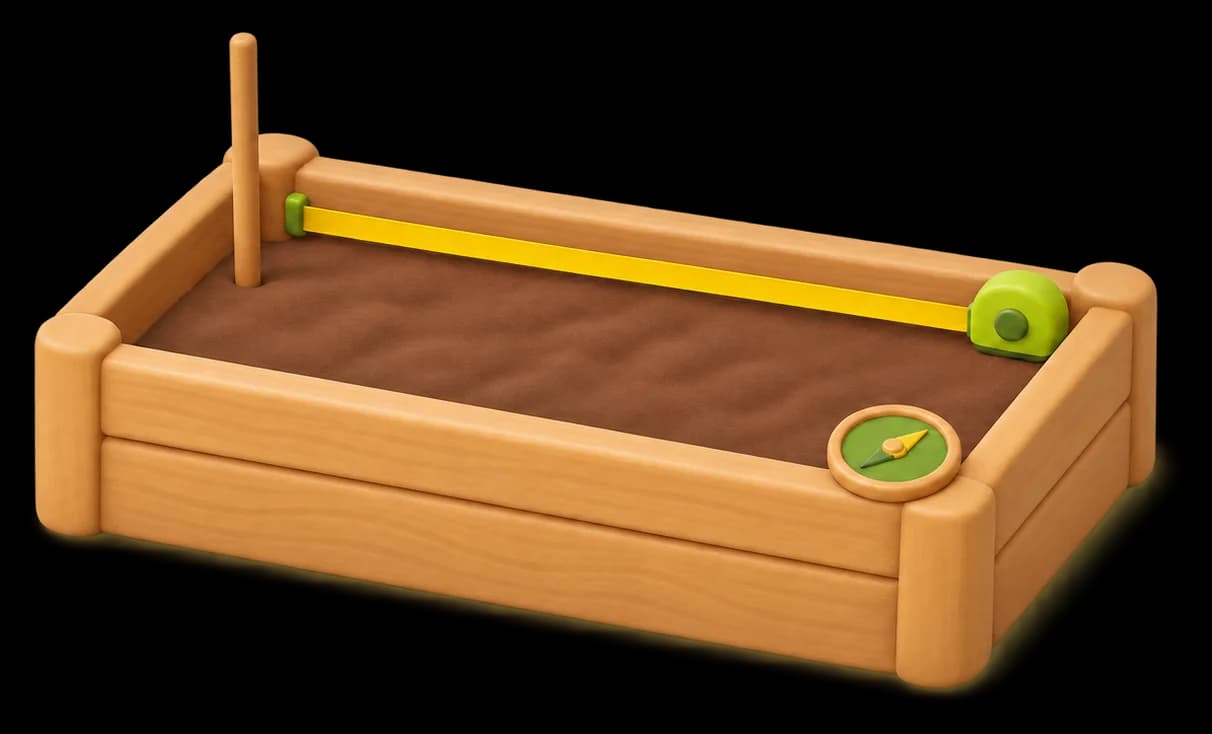
It takes about a quarter of an hour with a tape measure and a phone compass. This guide explains each measurement, why it matters and what to do with an awkward bed.
What you need
- A tape measure (a long, rigid builder's tape is easiest).
- A cane, ruler or straight stick to check soil depth.
- A phone compass, or a map app that shows north.
- Somewhere to write the figures down.
Measure the inside, not the outside
The frame of a raised bed takes up space. Planning on the outside measurements would put rows where the sides are, so always use the soil area between the inner faces of the frame.
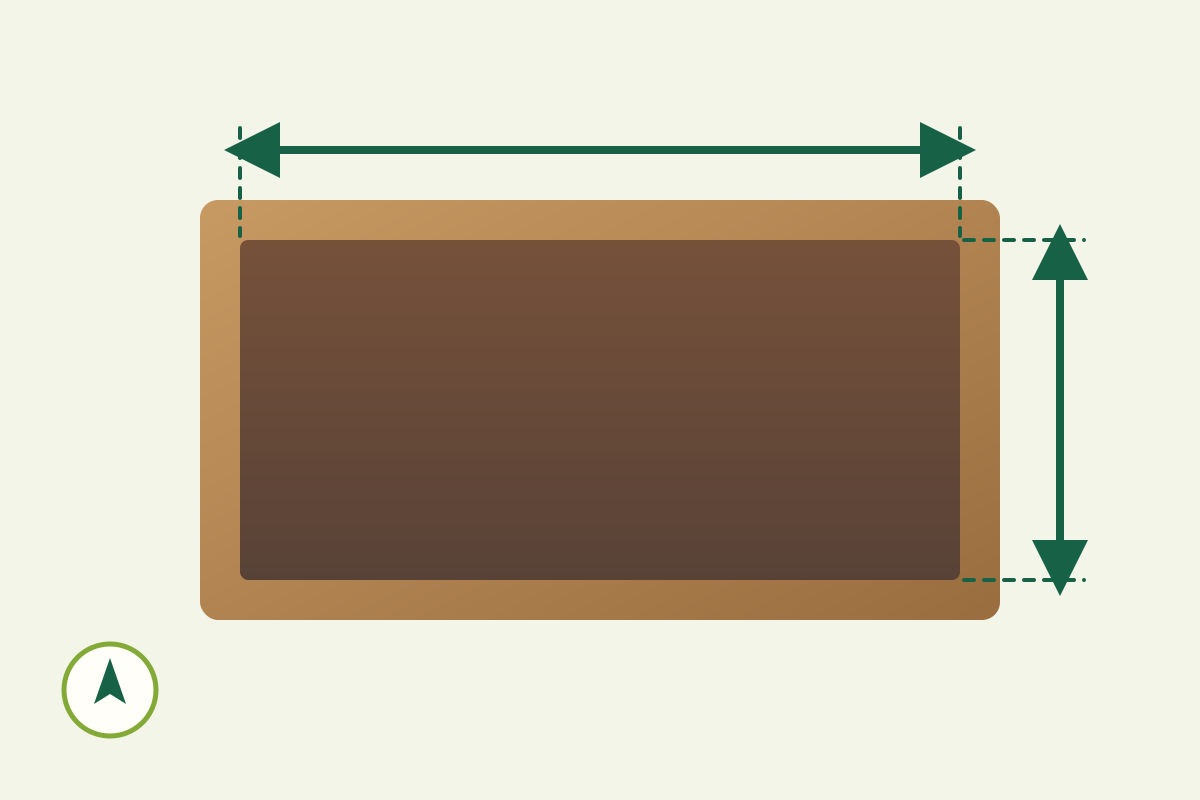
Measure the length along the inside of the longest side, then the width across the bed between the two long sides. Write both down in centimetres; if your tape is in inches, convert before you plan, because most UK spacing advice is metric.
If the bed is not quite square, measure the width at both ends and use the smaller figure. A plan that fits the narrow end will fit the whole bed.
Why width matters
The RHS suggests keeping beds under 1.5 m wide so you can reach the middle without standing on the soil. If your bed is wider than that, consider leaving a stepping strip or path in your plan rather than planting every centimetre. Our guide to raised bed sizes covers the common sizes and how they compare.
Measure the soil depth
The height of the frame is not always the depth of usable soil. Beds settle, and some sit on hard standing, so push a cane straight down in a few places and note where it stops.
Depth decides which crops will do well. The RHS says about 30 cm is enough for salad leaves, while many plants need 45 cm or more. Sowstory's knowledge base sets a minimum depth for a few crops: 30 cm for early carrots and first early potatoes, and 20 cm for radishes. Our guide to how deep a raised bed should be explains the figures crop by crop.
Find north
Knowing which edge faces north lets you put tall crops, such as climbing beans or cordon tomatoes, along that side, where their shadow falls outside the bed instead of over shorter crops. This is Sowstory's planning rule; our raised bed layout guide shows how it works in practice.
Stand beside the bed with a phone compass and note which side faces north: one of the long sides, one of the short ends, or a corner. If a corner points north, note the edge that faces closest to north.
Note the sunlight
Most vegetables do best in sun. The RHS counts more than six hours of direct sun a day at midsummer as full sun and three to six hours as partial shade. It also lists crops that cope with light shade, including beetroot, chard, kale, leaf salads, lettuce, peas and spinach, while its vegetable positioning advice says fruiting crops suffer most in shade.
On a clear day, check the bed in the morning, at midday and in the afternoon, and count roughly how many hours it is in direct sun. A fence, wall or hedge can shade part of the bed, so note that too. Sun is lower and shadows longer in winter, so a bed that looks shady in November may be much sunnier in June.
Recording what you find
Write the figures down. A typical record looks like this:
| What | Example |
|---|---|
| Inside length | 240 cm |
| Inside width | 120 cm |
| Soil depth | 30 cm |
| North edge | One of the long sides |
| Sunlight | About 6–8 hours in summer |
With these numbers you can work out how many rows and plants fit using our plant spacing chart: divide the bed length by the spacing along a row, and the bed width by the spacing between rows.
If you would rather not do the arithmetic, the Sowstory planner takes exactly these measurements (length and width to the millimetre, the north edge, the sun and, optionally, the soil depth) and lays out your bed to scale. It works in your web browser now, and your first bed plan is free.
Common measuring mistakes
- Using the outside size. The frame's thickness comes off both ends of every measurement.
- Using the frame height as the depth. Check the loose soil, especially in a bed on paving.
- Rounding up. A plan built on a rounded-up width may not fit. Round down instead.
- Judging sun in winter. Low winter sun gives a misleading picture; think about summer shade from walls, trees and fences.
Next steps
Once you have the measurements, read how sowing windows work before choosing what to sow, and see how Sowstory lays out a bed if you want the planner to place the rows for you.
Sources
- RHS: Raised beds
- RHS: Shade gardening
- RHS: Positioning vegetables
- Sowstory knowledge base, release v1.4