
Chitting potatoes means letting seed potatoes sprout short, sturdy shoots before you plant them, and in England you start in late January in milder areas or by early March in colder ones. The RHS says it takes four to six weeks and is worth doing mainly for first and second earlies, which then crop sooner; maincrops gain little.
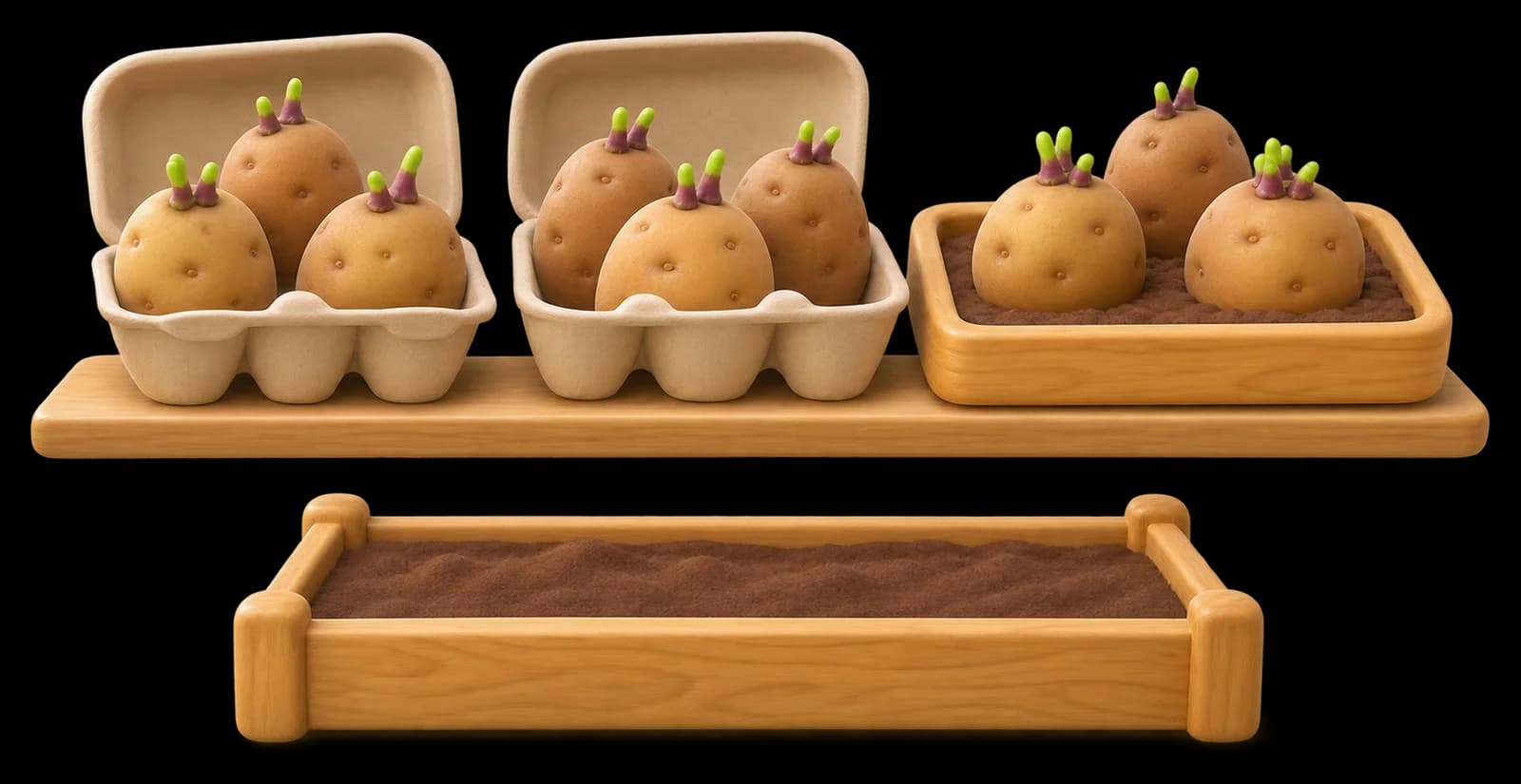
This guide covers when to start chitting for each type of potato, how to do it, how long the shoots should be and how many chitted tubers fit a raised bed. For the whole growing season, from earthing up to blight and harvest, see how to grow potatoes.
Chitting potatoes at a glance
| Question | Answer |
|---|---|
| What it is | Sprouting seed potatoes before planting |
| When to start | Late January (milder areas) to early March (colder areas), RHS |
| How long it takes | Four to six weeks (RHS) |
| Where | Cool, bright and frost-free |
| Shoot length to aim for | About 5 cm (RHS); 1.5–2.5 cm (Mr Fothergill's) |
| Worth it for | First and second earlies |
| Maincrops | Not needed (RHS, Mr Fothergill's) |
| Plant out (Sowstory, England) | First earlies March–April, second earlies April, maincrops April–May |
What is chitting, and do you need to chit potatoes?
A seed potato is a tuber grown for planting, and its eyes are the buds that shoots grow from. Chitting lets those shoots start growing indoors before planting, which the RHS says helps early varieties crop sooner.
It is optional. The RHS says unchitted early potatoes still crop, just a few weeks later. Gardeners' World describes chitting as something many people do for their earlies before planting. The gain matters most for crops you want to lift early, which is the whole point of a first early.
When to chit potatoes for each type
Work back from when you plan to plant. Chitting takes four to six weeks, according to the RHS, and it suggests starting from late January in milder areas or by early March in colder ones. In England the south and coasts are usually milder and earlier; the north, inland gardens and high ground are later.
| Type | Plant out (RHS) | Plant out (Sowstory) | Start chitting (4–6 weeks before) |
|---|---|---|---|
| First earlies | Late March | March to April | Mid to late February |
| Second earlies | Early to mid April | April | Late February to early March |
| Maincrop | Mid April to early May | April to May | Not needed |
The last column is simple arithmetic: late March minus six weeks is mid-February, and minus four weeks is late February. If you live in the north, Gardeners' World says planting runs a couple of weeks later, so your chitting can start later too. Gardeners' World also plants first earlies a little earlier than the RHS, from mid-March.
For what else is happening in those months, see what to plant in February, what to plant in March and what to plant in April.
How to chit potatoes
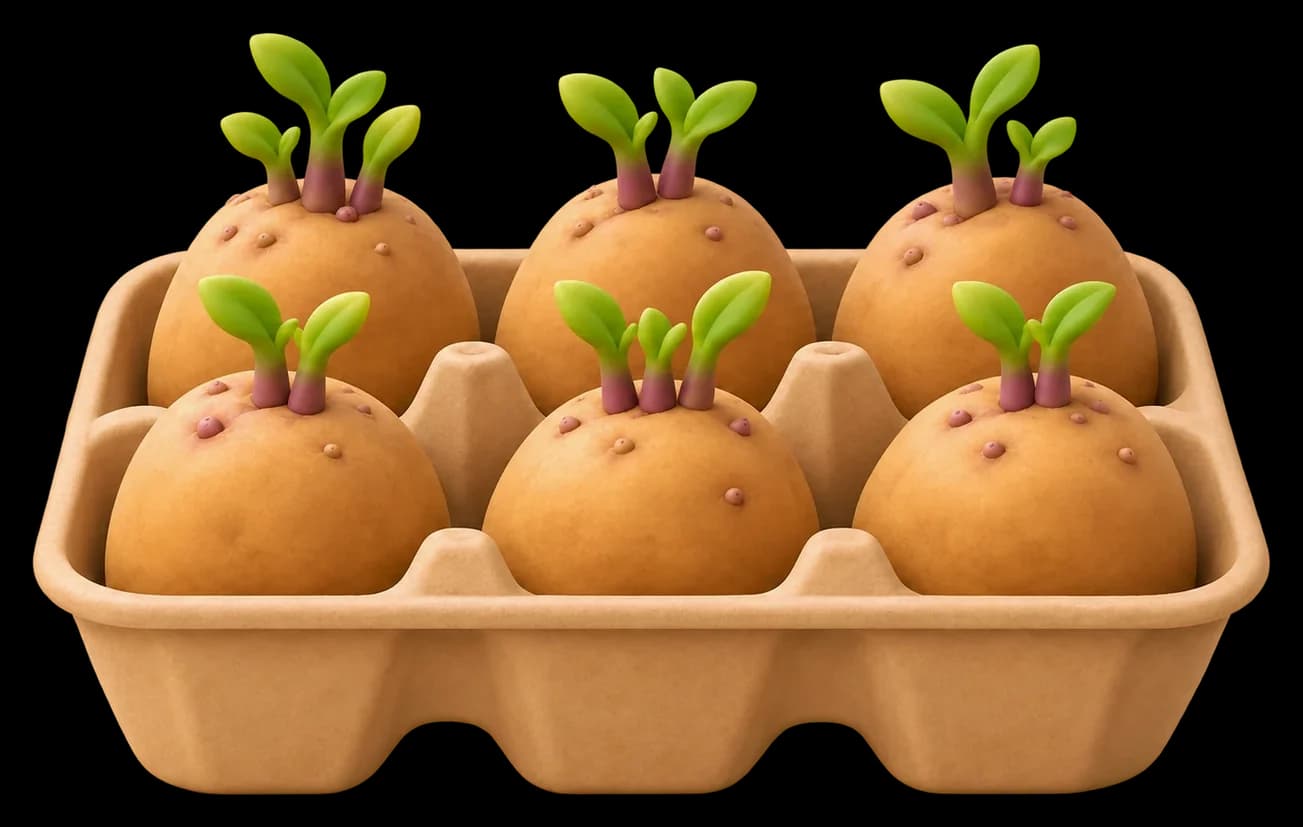
- Pick a container. Egg boxes and seed trays both work, because they hold each tuber upright. The RHS and Gardeners' World both suggest them.
- Find the eyes. One end of a seed potato usually has more eyes than the other. Gardeners' World says to stand the tuber with that end facing up.
- Choose the spot. The RHS asks for somewhere cool, bright and frost-free. Gardeners' World also asks for a cool spot with light.
- Label each box. Keep one variety per box and note whether it is a first early, second early or maincrop, as they go out at different times.
- Leave them alone. Check now and then, but there is nothing else to do for four to six weeks.
How long should the shoots be?
Sources differ. The RHS expects shoots of about 5 cm after four to six weeks. Mr Fothergill's suggests chitting until they are about 1.5–2.5 cm long. Gardeners' World gives no length and describes short, sturdy shoots. Any of these lengths is fine to plant. Whatever the length, handle the tubers gently, as the shoots are easy to knock off.
How many shoots to leave
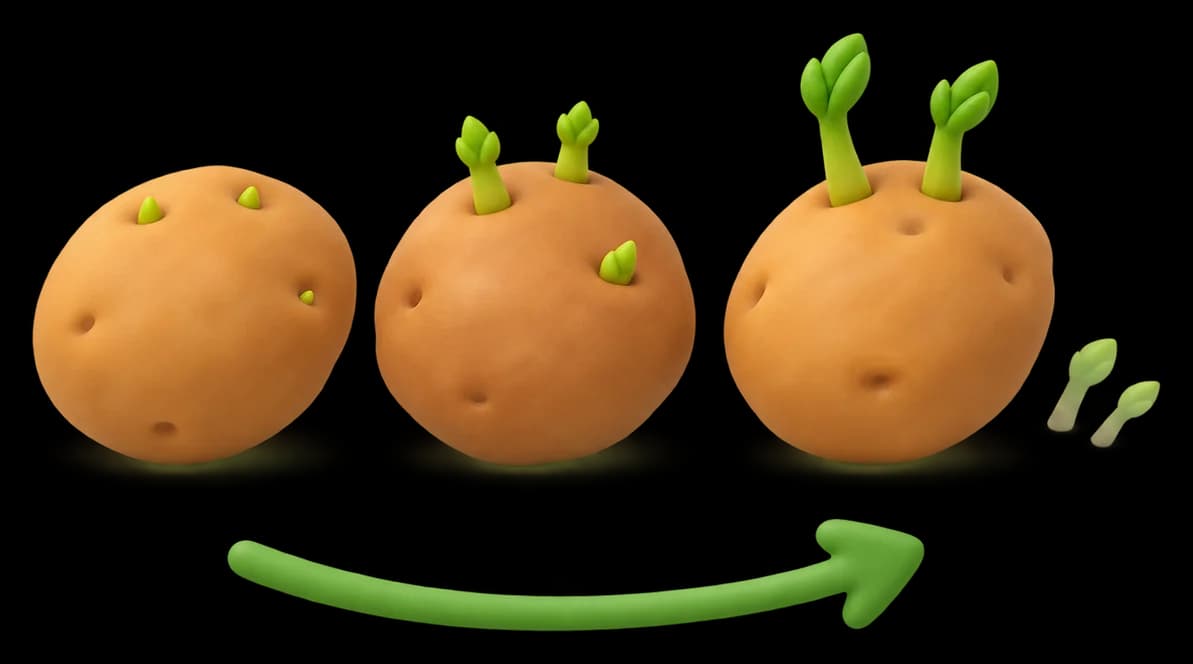
Gardeners' World says a seed potato needs only one or two shoots to grow, and that you can rub off any extras with your fingers. The RHS does not mention removing shoots, so treat this as optional.
Do maincrop potatoes need chitting?
No. The RHS says maincrops gain no real advantage from chitting, and Mr Fothergill's says chitting is not needed for its maincrop 'Maris Piper'. Maincrops are in the ground for much longer, so a head start of a few weeks makes little difference to when you lift them. Sowstory notes the same in its maincrop profile: no chitting needed, planted mid-April to early May.
If you have the space, there is no harm in chitting maincrops too. Just do not let it hold you up: it is the earlies that benefit.
Planting chitted potatoes in a raised bed
Once the shoots are ready and the weather allows, plant the tubers shoots up and handle them gently so the shoots do not break.
- Depth. The RHS digs a trench about 15 cm deep. Gardeners' World uses a 12 cm trench and plants earlies 10–15 cm deep.
- Spacing. The RHS spaces earlies 30 cm apart in rows 60 cm apart, and maincrops 37 cm apart in rows 75 cm apart. Gardeners' World gives 40 cm for maincrops.
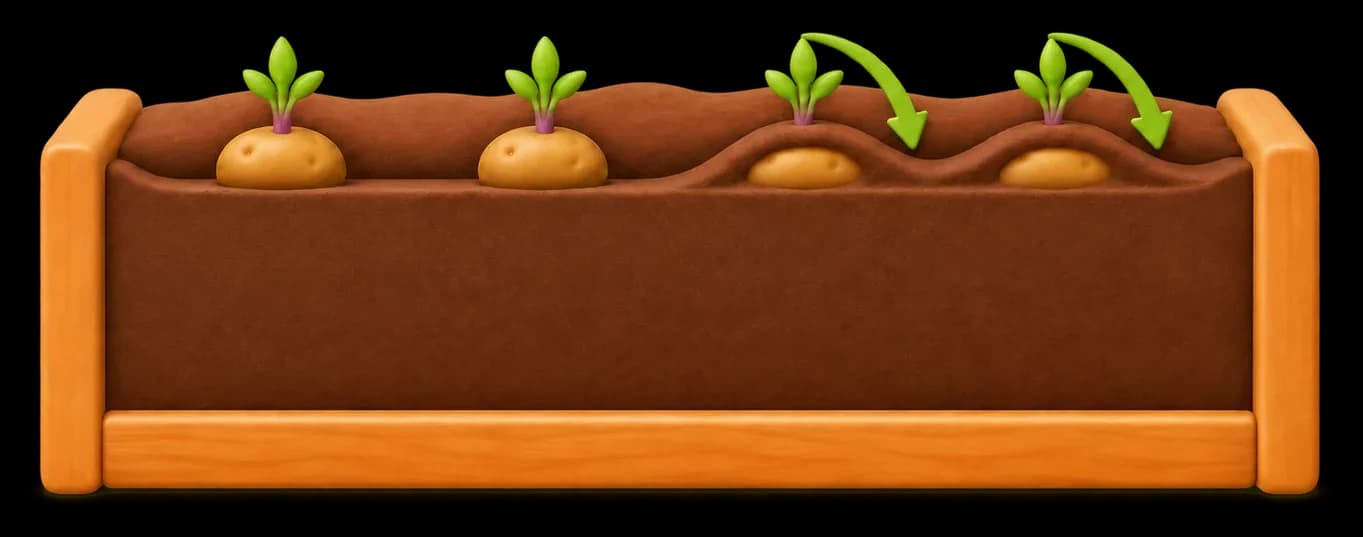
- Row width. Sowstory uses the RHS in-row figures but reserves a 90 cm strip for every potato row, wider than the RHS rows. That is the soil you need either side to earth up into a ridge inside the edges of a bed.
How many seed potatoes fit a 1.2 × 2.4 m bed?
With rows along the 2.4 m length, a 1.2 m wide bed has room for one 90 cm potato strip (two would need 1.8 m). Along that row:
- First or second earlies: 240 cm ÷ 30 cm = 8 tubers.
- Maincrops: 240 cm ÷ 37 cm = 6.5, so 6 tubers.
So you only need eight seed potatoes of an early variety for a bed this size. That leaves about 30 cm of the bed's width (120 − 90 cm) for a low crop. The RHS suggests fast salad radishes for gaps between slower crops such as potatoes, and Sowstory's radish row needs only 15 cm. The plant spacing chart lists the row widths for other crops.
How deep the bed needs to be
Sowstory checks for at least 30 cm of soil before it plans first early potatoes; it sets no separate depth rule for second earlies or maincrops. Remember that the tubers sit about 15 cm down and the ridge builds up above them. See how deep a raised bed should be if your bed is shallow.
Potato foliage grows to a medium height, so keep taller crops such as climbing beans on the north edge, as our raised bed layout guide explains. A row of first earlies holds its strip for about 12 weeks in Sowstory's plan, so it is usually free again by midsummer: the RHS suggests a later crop such as courgettes or beans.
If you would rather not work out ridge widths and planting months by hand, Sowstory lays out your bed to scale, tells you how many seed potatoes fit and gives a month-by-month timing plan for England. It works in your web browser now, and your first bed plan is free.
Protecting new shoots from frost
Chitted shoots are tender once they are above ground. The RHS says earthing up, drawing soil over the young stems, protects them from frost. It also notes that colder areas plant later and milder areas earlier. Sowstory's months are England-wide rather than adjusted to your postcode, and it does not give a frost date for your address, so watch the forecast in March and April; our guide to the last frost in your area explains how to judge it.
An earlier crop under cover
The RHS describes one more option for keen growers: plant chitted earlies in large containers in a frost-free greenhouse at the start of March, for a crop around mid-May. It needs containers at least 30 cm wide and deep. This sits outside a raised-bed plan, but it is a good use of a few spare chitted tubers.
Common chitting mistakes
- Chitting maincrops and waiting for them. The RHS says maincrops gain no real advantage, so do not delay planting them for the sake of shoots.
- Planting before the weather suits. Shoots above ground are tender. Colder areas plant later, according to the RHS, and Gardeners' World adds a couple of weeks for northern areas.
- Leaving every shoot. Gardeners' World says one or two shoots are enough. Removing the rest is optional; the RHS does not mention it.
- Buying more than the bed holds. Eight earlies fill one row of a 1.2 × 2.4 m bed. Buy for the space you have.
For which plants grow well near potatoes, and which crop to follow them with, see potatoes companion plants.