
To grow spinach in England, sow it direct into a raised bed in spring (March to May) or late summer (August to September), in drills about 2.5 cm deep, and thin the seedlings to about 15 cm apart. Keep the soil moist and avoid the hottest weeks of summer, because spinach runs to flower (bolts) in heat and drought; baby leaves are ready to pick in about a month.
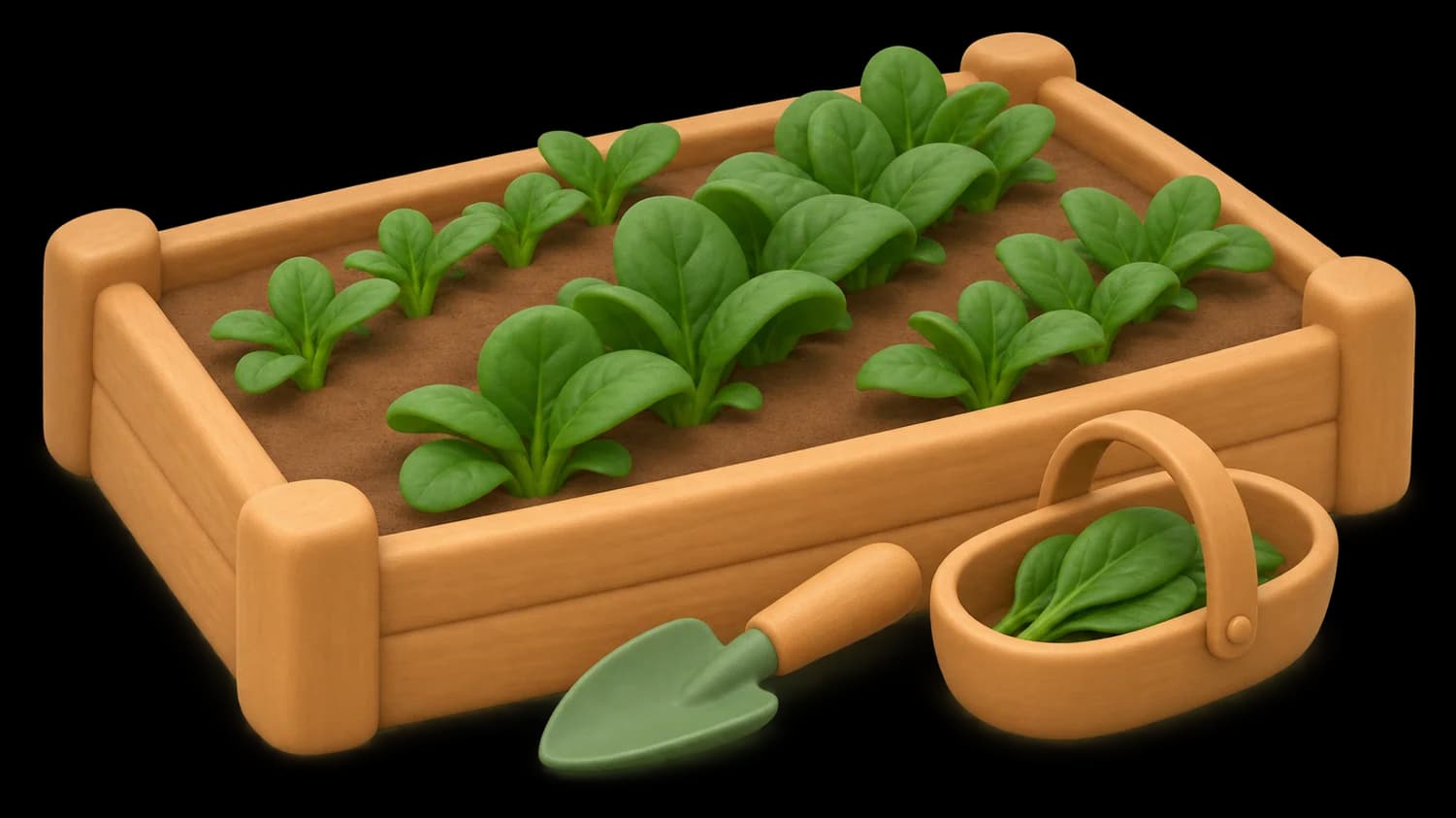
This guide covers annual spinach in a raised bed: when to sow, spacing and how many fit, watering, bolting, overwintering, harvest and the common problems. Perpetual spinach, which is really a leaf beet, has its own short section.
Spinach quick facts
| Fact | Annual spinach |
|---|---|
| Sow direct | March to May and August to September (Sowstory) |
| Sowing depth | About 2.5 cm (RHS); Gardeners' World says 1.5 cm |
| Between rows | Sowstory 30 cm (RHS 20 cm, Gardeners' World 40 cm) |
| In the row | Sowstory 15 cm (RHS thins to 7.5 cm, then picks every other plant) |
| Sun | Sun or part shade; tolerates four to six hours |
| Best temperature | About 15–20°C (RHS) |
| Harvest | Baby leaves in about a month, full leaves in about two (RHS) |
| Bed space reserved | About 10 weeks per sowing |
| In a 1.2 × 2.4 m bed | About 48 plants in three rows |
When to sow spinach
Spinach grows best in cool weather. The RHS puts its ideal growing temperature at about 15–20°C, and both hot, dry spells and cold snaps can make it bolt. That gives two main sowing seasons, and Sowstory's England plan uses both: March to May, then August to September, with a gap in midsummer.
Spring sowings
The RHS recommends sowing outdoors in mid to late spring for leaves in late spring and summer. Very early sowings in cold soil tend to bolt, so either wait or protect them with a cloche or fleece. The RHS February and March job lists allow spinach outdoors earlier only on light soil in mild areas. Our guides to what to sow in March and what to sow in April show what else goes in alongside it.
You can also start spinach indoors in modules from early spring, one seed per cell. The RHS usually prefers sowing direct, though, because moving the plants can trigger bolting. If you do transplant, plant out when the seedlings are about 10 cm tall, 15 cm apart, after hardening them off.
Late-summer and winter sowings
The second window opens as summer cools. The RHS suggests sowing hardy varieties from late summer to early autumn for leaves in autumn and again in early spring. Its advice is to hold off while late-summer heat is still high, as germination suffers, but not to leave it so late that the plants cannot establish before winter. The RHS September jobs list includes overwintering spinach, and Gardeners' World includes spinach among its July sowings.
See what to sow in August and what to sow in September for the rest of the late-summer list. Across England, the south and coasts warm up earlier in spring and stay mild longer in autumn; the north, inland areas and high ground are later in spring and colder sooner. Sowstory's months are England-wide and not adjusted to your postcode, so judge the soil and weather where you are.
How to sow spinach
Spinach needs fertile soil that holds moisture. The RHS suggests forking in plenty of garden compost or well-rotted manure before sowing, and raking in an organic general-purpose fertiliser on poor soil. In a no-dig bed, it suggests a mulch at least 5 cm thick between November and February, then sowing straight into it.
Sow thinly in drills. The RHS gives a depth of about 2.5 cm, and Gardeners' World about 1.5 cm, so somewhere in that range works. Water the drill well. For a steady supply, the RHS suggests sowing a short row every few weeks in spring and again in late summer and autumn; Gardeners' World says every three to four weeks.
How to thin spinach
When the seedlings are big enough to handle, the RHS thins them to 7.5 cm apart, pulling out the weaker ones. A few weeks later it harvests every other plant for salad, which leaves the rest about 15 cm apart. If you only want baby leaves, you can leave them unthinned.
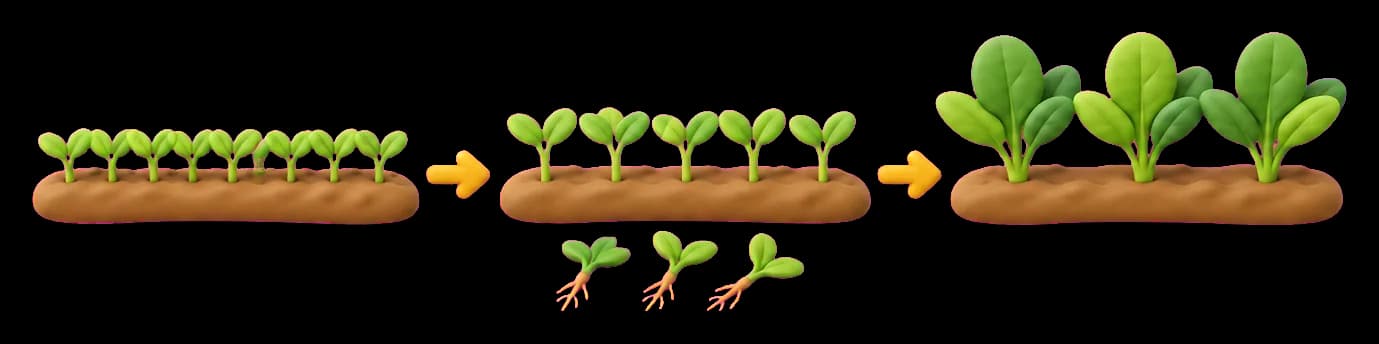
Spinach spacing in a raised bed
Spacing advice varies more than for most crops:
- RHS: rows 20 cm apart, seedlings thinned to 7.5 cm (15 cm after picking every other plant), and 15 cm for transplants.
- Gardeners' World: rows 40 cm apart, plants thinned to 15 cm.
- Sowstory: rows 30 cm apart, with 15 cm between plants, a middle figure between the two sources.
Growing spinach in raised beds: how many fit
Using Sowstory's spacing in a 1.2 × 2.4 m bed (about 4 × 8 ft), with rows running along the length:
- 15 cm between plants gives 16 plants in each 2.4 m row (2,400 ÷ 150 = 16).
- Sowstory plans up to three rows of spinach in a bed.
- That is about 48 plants (3 × 16) if the whole bed were spinach.
In practice most people grow one row and sow another a few weeks later. Spinach does not need the sunniest spot: Sowstory treats it as a crop that tolerates four to six hours of direct sun, and the RHS lists spinach among the vegetables that cope with light shade. That makes it useful for the shadier part of a bed, while tall crops go on the north edge as our raised bed layout guide explains. The RHS also suggests sowing in light shade in warm weather.
Each sowing holds its row for about 10 weeks in Sowstory's plan, so a March row is finished by early summer, and an August row can go into space cleared by an earlier crop. Sowstory sets no minimum soil depth for spinach; the plant spacing chart has the figures for every crop you might grow next to it.
If you would rather not juggle the rows and sowing dates by hand, Sowstory will lay out your bed to scale, tell you how many rows of spinach fit and give a month-by-month timing plan for England. It works in your web browser now, and your first bed plan is free.
Caring for spinach
Watering
Water in dry weather and never let seedlings dry out. The RHS suggests watering early in the morning rather than in the evening, because damp leaves overnight encourage slugs, snails and downy mildew. Gardeners' World advises watering at the base of the plants and calls good watering after thinning the most important job.
Weeding
Keep the row weeded, especially while the plants are young.
Stopping spinach bolting
Bolting is when a plant runs up a flower stalk early, and it ends the harvest. The RHS lists the triggers as cold spells, hot and dry weather, a lack of water and changing day length. To reduce the risk:
- Keep the soil moist.
- Grow spinach in spring and autumn rather than midsummer.
- In hot weather, give it light shade; Gardeners' World suggests temporary shade to stop the soil drying out.
- Choose a slow-to-bolt variety. The RHS describes 'Missouri' as slow to bolt and 'Amazon' as resistant to bolting; both have its Award of Garden Merit.
Once a flower stalk appears, the leaves turn bitter. The RHS suggests pulling the plant up and composting it.
Spinach through the winter
Late-summer sowings of hardy varieties can crop in autumn and again in early spring. The RHS suggests covering them with cloches or fleece from October, unless you live somewhere very mild, and giving early spring sowings the same protection. Gardeners' World recommends 'Atlanta' as a hardy winter variety.
Harvesting spinach
The RHS says baby leaves are ready about a month after sowing, and full-size leaves in about two months. Gardeners' World gives 6 to 10 weeks, and sooner in warm weather. There are two ways to keep picking:
- A few leaves at a time: take some leaves from each plant every few weeks, until the plants start to flower.
- Cut and come again: after a couple of months, cut the whole row just above the base. Well-rooted plants should regrow for at least one more cut.
Gardeners' World says summer varieties crop from May to October and winter varieties from October to April.
Common spinach problems
- Bolting. Covered above: heat, drought, cold and day length all play a part.
- Downy mildew. A mould that spreads in humid weather, especially among crowded plants. Good spacing, airflow and watering at the base help, and the RHS names 'Amazon' as resistant. Gardeners' World also advises crop rotation, as the spores can persist in the soil.
- Slugs and snails. They eat the soft young leaves. Morning watering and weeding both help.
- Birds and pigeons. The RHS says birds such as pigeons can damage seedlings and young leaves, and Gardeners' World advises protecting young seedlings.
Perpetual spinach and other "spinach"
Perpetual spinach (spinach beet) is not true spinach. The RHS describes it as a type of leaf beet or chard, not closely related to annual spinach, and says it can crop for up to a year. Gardeners' World adds that it is slow to bolt and copes with drier soil. The RHS April jobs list includes sowing it outdoors.
Sowstory's plan includes annual spinach and chard, but it has no separate profile for perpetual spinach. If you want leaves through the summer gap, chard is the closest crop it plans, sown from March to July. For another quick leaf crop for the same bed, see our guide to growing lettuce.
Sources
- RHS: How to grow spinach
- BBC Gardeners' World: How to grow spinach
- RHS: Positioning vegetables
- RHS: February jobs in the vegetable garden
- RHS: March jobs in the vegetable garden
- RHS: April jobs in the vegetable garden
- RHS: September jobs in the vegetable garden
- BBC Gardeners' World: Your seed sowing year
- Sowstory knowledge base, release v1.4